
A dryer that is not heating is usually caused by a failed heating element, a blown thermal fuse, a clogged vent, a faulty thermostat, a failed gas igniter, or a timer or control fault. The dryer may still tumble, but the air stays cool and clothes come out damp. Weak heating, with clothes taking two or three cycles, is often an early sign of the same faults.
This guide explains the common causes, how gas and electric dryers differ, and why a clogged vent is a fire risk. If your dryer has stopped heating in Staten Island, call us to book a diagnostic visit with Staten Island Appliance Repair.
First, check the simple things
Check that the dryer has power, is set to a heated setting, and that the lint filter is clean. Clean the filter after every load.
Check that the dryer is not overloaded, the vent hose is not crushed, and the outside flap opens when the dryer runs. Do not open the dryer cabinet or test electrical parts yourself.
Heating element failure
On an electric dryer, the heating element is a coil that heats air into the drum. If it breaks, the dryer will tumble but the air will stay cool.
A failed element is a common cause of a dryer that runs but does not heat. A technician will also check the thermostat and the thermal fuse.

Thermal fuse
The thermal fuse cuts power to the heating element if the dryer overheats. Once blown, it must be replaced. It blows most often because of poor airflow, usually from a clogged vent.
Replacing a thermal fuse without checking the vent is a mistake: if the vent is still blocked, the new fuse will blow again. A proper repair replaces the fuse and checks the vent and airflow.
Clogged vent and fire risk
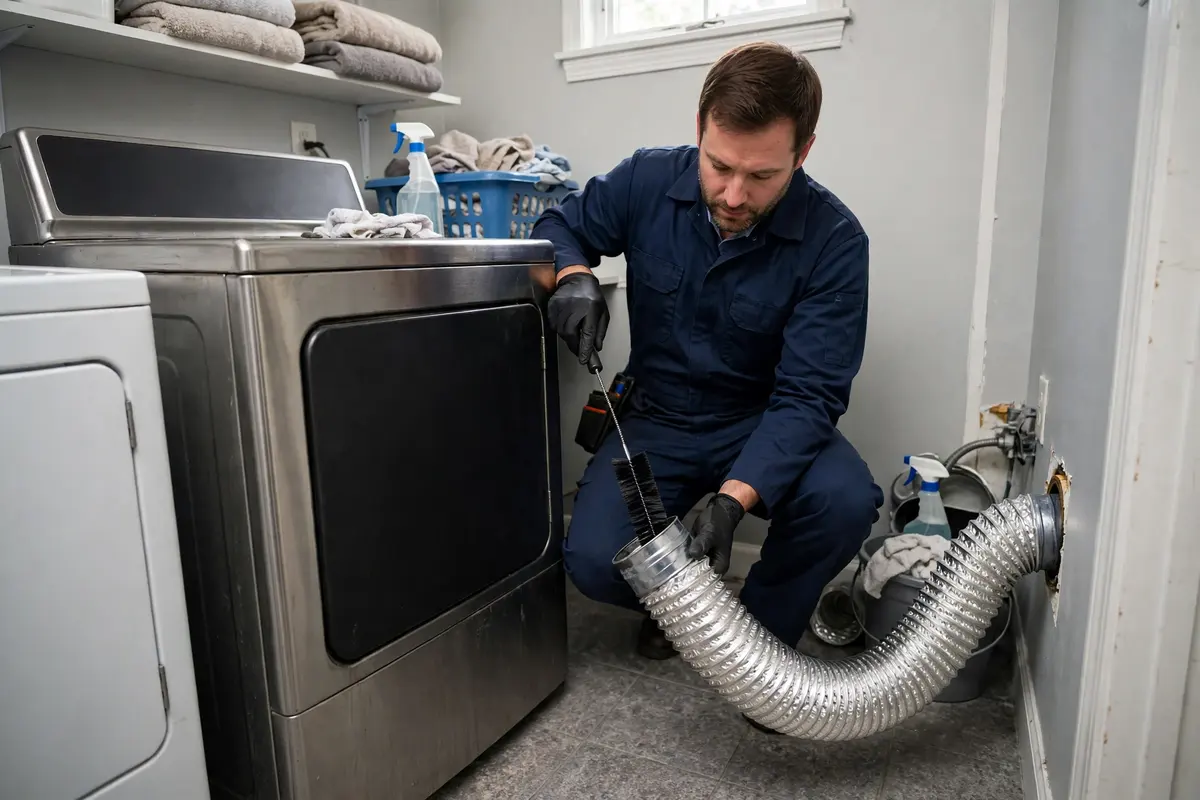
A clogged dryer vent is a major cause of a dryer that will not heat, and it is also a fire risk. Lint builds up, restricts airflow, and makes the dryer overheat.
Many Staten Island homes have basement laundry rooms with long vent runs, where lint settles and is hard to clean. Signs of a blocked vent include longer drying times, a very hot dryer, and a burning smell.
Do not run a dryer with a crushed or blocked vent. If you notice a burning smell, stop the dryer and do not use it again until the vent has been checked.
Thermostat and temperature sensor
The thermostat and sensor control how hot the dryer gets. If a thermostat fails, the dryer may not heat, may heat weakly, or may overheat.
Thermostat faults can look like heating element faults, since the symptom is the same. Testing is needed to tell them apart, so a technician tests each part in turn and replaces only the one that has failed.
Gas igniter and gas valve
On a gas dryer, heat comes from a gas burner. The igniter lights the gas. If it is weak, the dryer may tumble but never heat. It may glow, but not hot enough to open the gas valve.
Gas valve coils can also fail, so the burner may light once and then stop. Never try to repair a gas dryer yourself. Gas work needs a qualified professional.
Timer and control faults
The timer and control board manage the cycle and the heat. If a control fails, the dryer may stop heating or end the cycle early.
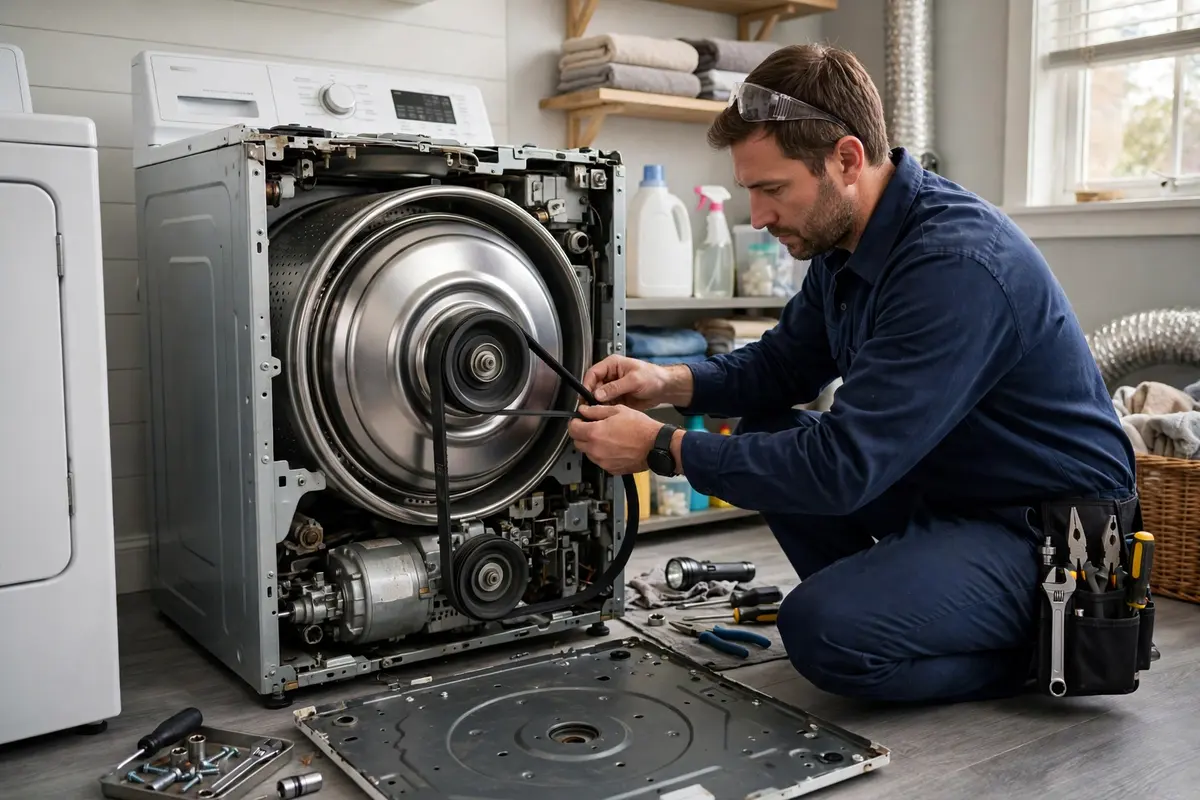
Control faults are less common than element, fuse, vent, or igniter faults, but they do happen, especially after a power surge. A control board is expensive, so it should only be replaced after the simpler parts have been tested.
Gas versus electric dryers
Gas and electric dryers share some faults: a clogged vent, a blown thermal fuse, a faulty thermostat, or a control fault.
The heating system differs. An electric dryer uses a heating element; a gas dryer uses a burner, an igniter, and gas valve coils. When you call, say whether your dryer is gas or electric.
Gas safety, what to do if you smell gas
If you smell gas near your dryer, treat it as an emergency. Stop using the dryer at once. Do not flip light switches, do not use a phone inside, and do not light matches. If the smell is strong, leave your home right away.
Once outside, call your gas utility emergency number or 911. Wait outside until they say it is safe to go back in. Only then call a qualified professional to check the dryer.
What to do next
Note whether the dryer tumbles, whether it heats at all, and whether you notice a burning smell or longer drying times. Clean the lint filter and check that the vent hose is not crushed. Do not run the dryer with a crushed or blocked vent, and do not try to repair gas parts yourself. Then call us to book a diagnostic visit with Staten Island Appliance Repair. The business serves Staten Island, NY. Its address is 205 Ridgecrest Ave, Staten Island, NY 10312. The diagnostic fee is $80 for standard brands and $95 for elite and premium brands.
Frequently Asked Questions
Why is my dryer not heating but still tumbling?
The drum and the heating system are separate. The motor can turn the drum while the heating element, thermal fuse, thermostat, or gas igniter has failed. A clogged vent can also stop the dryer heating.
Why does my dryer take two or three cycles to dry clothes?
Clothes that need several cycles often point to weak heating or poor airflow: a partly clogged vent, a dirty lint filter, a failing heating element, or a thermostat fault.
What is a thermal fuse, and why does it blow?
A thermal fuse cuts power to the heating element if the dryer overheats. It blows most often because airflow is poor, usually from a clogged vent. Once blown, it must be replaced, and the vent should be checked at the same time.
Is a clogged dryer vent a fire risk?
Yes. Lint in a vent restricts airflow, makes the dryer overheat, and can catch fire. Long vent runs, common in Staten Island basement laundry rooms, are more prone to build up. Do not run a dryer with a crushed or blocked vent.
What is the difference between a gas dryer and an electric dryer that will not heat?
Both can suffer from a clogged vent, a blown thermal fuse, or a thermostat fault. An electric dryer heats with a coil; a gas dryer heats with a burner, so a failed igniter is a common cause.
My gas dryer igniter glows but the dryer does not heat. What does that mean?
A glowing igniter does not always mean a working igniter. A weak one may glow but not get hot enough to open the gas valve. Do not try to test gas parts yourself.
What should I do if I smell gas near my dryer?
Stop using the dryer, do not flip switches or light matches, and leave your home if the smell is strong. Call your gas utility emergency number or 911 from outside, and wait until it is safe to return.
Should the vent be checked when a dryer is repaired?
Yes. A clogged vent can cause the fault, can make a new part fail again, and is a fire risk. Ask the technician to check the vent run as well as the heating parts.